One customer, several versions
CRM, finance and support hold different records. Connecting the information depends on manual checks.
Data for Decisions · Tech Human
Scattered data, inconsistent records and missing context limit business decisions and AI projects. Tech Human builds the foundation: centralizing access, integrating sources, addressing quality and defining how each dataset can be used.
Senior specialists in data, architecture and artificial intelligence.
The problem starts before the model
When every department works from a different version of reality, leaders must reconcile figures before making decisions. Connecting AI to this environment can carry those inconsistencies into answers, recommendations and automated actions.
CRM, finance and support hold different records. Connecting the information depends on manual checks.
Sales and finance call different figures revenue, using different rules and periods. The discussion starts with the spreadsheet.
Outdated documents, fields without definitions and restricted information enter the same collection without clear rules for use.
Tech Human addresses these weaknesses at their source and builds a shared foundation with explicit criteria for people, systems and AI.
Architecture explained
Scattered data needs more than a connection. Tech Human’s senior specialists design and implement the integration, quality, context and access layers that support decisions and AI.
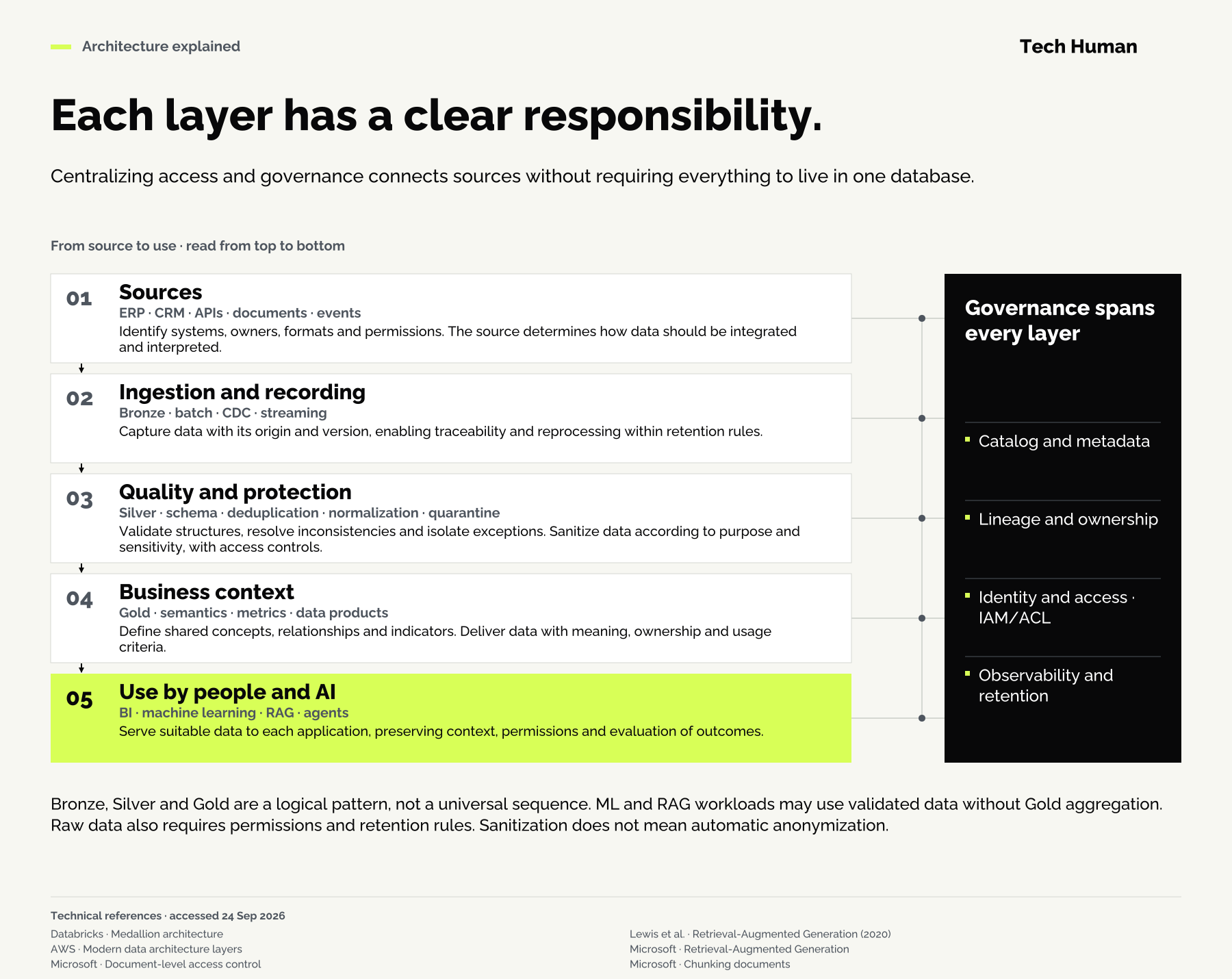
Centralizing access and governance connects sources without requiring everything to live in one database.
From source to use · read from top to bottom
01 · ERP · CRM · APIs · documents · events
Identify systems, owners, formats and permissions. The source determines how data should be integrated and interpreted.
02 · Bronze · batch · CDC · streaming
Capture data with its origin and version, enabling traceability and reprocessing within retention rules.
03 · Silver · schema · deduplication · normalization · quarantine
Validate structures, resolve inconsistencies and isolate exceptions. Sanitize data according to purpose and sensitivity, with access controls.
04 · Gold · semantics · metrics · data products
Define shared concepts, relationships and indicators. Deliver data with meaning, ownership and usage criteria.
05 · BI · machine learning · RAG · agents
Serve suitable data to each application, preserving context, permissions and evaluation of outcomes.
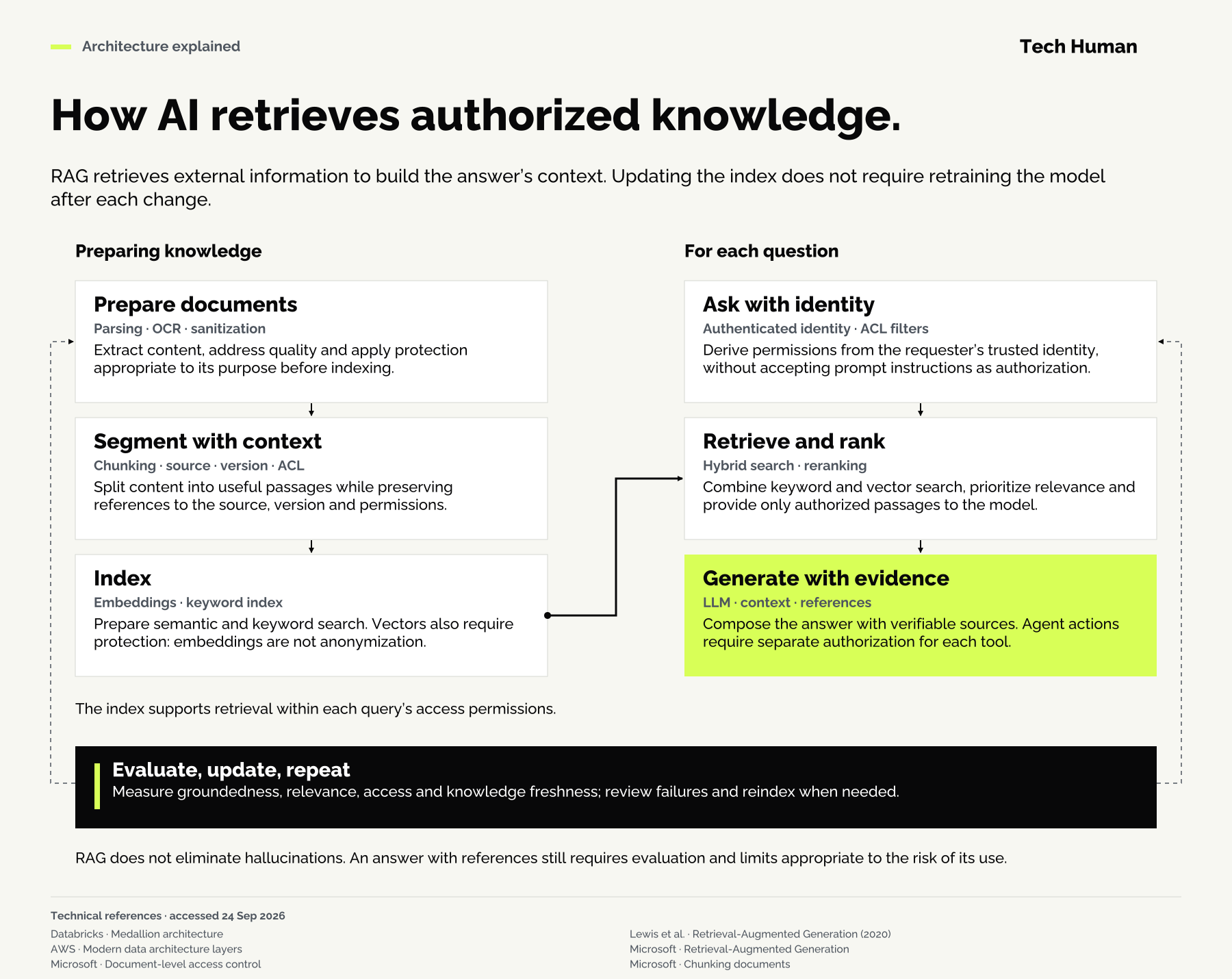
RAG retrieves external information to build the answer’s context. Updating the index does not require retraining the model after each change.
01 · Parsing · OCR · sanitization
Extract content, address quality and apply protection appropriate to its purpose before indexing.
02 · Chunking · source · version · ACL
Split content into useful passages while preserving references to the source, version and permissions.
03 · Embeddings · keyword index
Prepare semantic and keyword search. Vectors also require protection: embeddings are not anonymization.
01 · Authenticated identity · ACL filters
Derive permissions from the requester’s trusted identity, without accepting prompt instructions as authorization.
02 · Hybrid search · reranking
Combine keyword and vector search, prioritize relevance and provide only authorized passages to the model.
03 · LLM · context · references
Compose the answer with verifiable sources. Agent actions require separate authorization for each tool.
The index supports retrieval within each query’s access permissions.
Technical references · accessed 24 Sep 2026
What Tech Human delivers
We connect business decisions to data engineering. Our work covers five areas, tailored to your company's sources, risks and maturity.
We map where data lives, who owns it and which source informs each decision. We organize access and definitions by business domain, without assuming everything must move into one database.
In practice
A map of sources, owners, definitions and access architecture.
We connect systems, spreadsheets and documents with update rules, validation and error handling. Refresh frequency follows operational needs; monitoring reveals when a flow stops or delivers incomplete data.
In practice
Implemented integrations, refresh routines and failure alerts.
We address duplicates, incompatible formats, gaps and discrepancies using criteria agreed with the business. We preserve provenance and route exceptions for review, helping prevent automated cleaning from removing legitimate information.
In practice
Quality rules, transformation records and exception handling.
We prepare datasets according to purpose, sensitivity and permissions. We apply minimization, masking or pseudonymization where appropriate and define what can be made available to analytics, models and agents.
In practice
Datasets prepared for each use, with documented restrictions and criteria.
We establish definitions, ownership, permissions and traceability. We make data available to metrics, products and AI with known sources, freshness and limitations, alongside routines to track quality over time.
In practice
A catalog, access rules, quality metrics and ways to consume the data.
Data in the age of artificial intelligence
An assistant needs to find relevant information. An agent that takes action must also respect rules and permissions. We prepare the foundation around four questions that guide implementation.
Well-prepared data supports AI evaluation. Reliability also requires testing responses, setting limits on actions and maintaining oversight proportionate to risk.
We identify the source, owner and transformations so information can be checked and discrepancies investigated.
We define refresh frequency, validity and version handling to reduce the use of superseded information.
We organize definitions, relationships and business rules so similar terms are not treated as equivalent. We prepare documents and knowledge bases while preserving the context AI retrieval needs.
We carry permissions and purpose restrictions through to use by people, applications and agents.
A hypothetical scenario
Imagine a company that wants AI to support its sales team. Answering this question requires connecting customer records, payments and support interactions through shared criteria.
Reconcile identities across systems, preserve histories and distinguish current information from older records.
Agree with the business on what warrants attention and which data supports that assessment.
Show relevant evidence to authorized staff and define which actions require human approval.
This is the path we structure: from fragmented information to a specific, verifiable use that can be monitored. The scenario illustrates the approach; it is not a client result.
How we work
Tech Human combines assessment, design and implementation. We prioritize a concrete problem and expand against criteria agreed with your team.
We examine decisions, sources, quality, access and dependencies. We define the initial use case, risks and how to verify delivery.
What your company receives
An assessment, priorities and a scope with acceptance criteria.
We implement integrations, data treatments and controls. We validate with users and data owners before extending use.
What your company receives
An implemented foundation, recorded validations and operational documentation.
We prepare your team and define monitoring, responsibilities and incident response. Ongoing support from Tech Human can be included in the contracted scope.
What your company receives
Knowledge transfer, an improvement plan and support within the agreed scope.
Senior expertise applied to your business
Our work combines technical leadership and specialist execution. Decisions involve the people who lead, operate and are accountable for the data.
We assess the existing environment, constraints and the cost of maintaining each choice before recommending technology.
We work across architecture, engineering, quality and governance, connecting technical direction with implementation.
We document decisions, rules and responsibilities so your company can track delivery and operate with clarity.
Not as a starting point. We assess what can be integrated and retained. We recommend migrations when the problem, risks and existing limitations justify them.
We start with the data needed for a defined use case. This allows quality, access and usefulness to be validated before expanding coverage.
In this service, cleaning addresses quality and consistency. Sanitizing prepares data for an authorized purpose and audience, reducing exposure of unnecessary or sensitive information.
It can include metrics, dashboards and data preparation for AI applications. We define these deliverables in the scope based on the decision or process that needs to improve.
Yes. Our work can include assessment, architecture, implementation, validation and ongoing support. The proposal sets out deliverables, responsibilities and follow-up for each contracted stage.
Talk to Tech Human
Bring us your operational challenge. Our specialists help identify what needs to be connected, prepared and governed to move decisions and AI forward.
We start with your context, your sources and the decision that matters.